


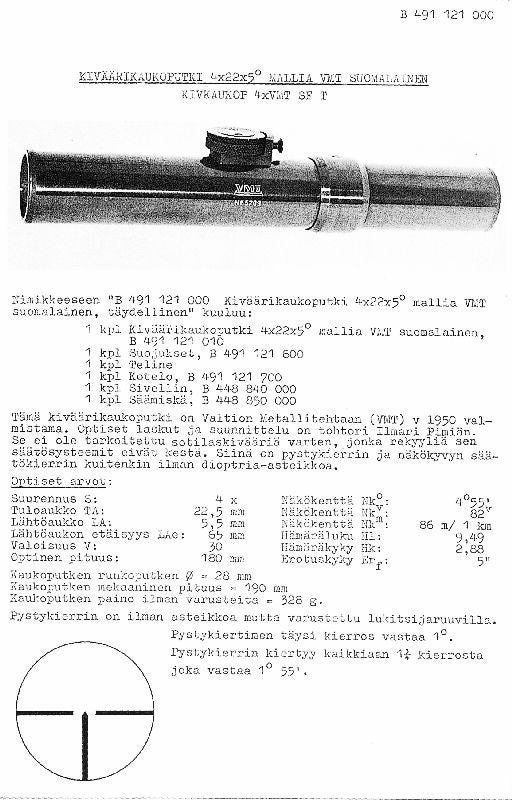
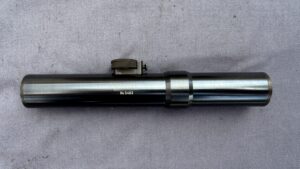
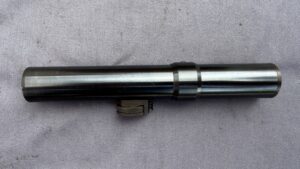
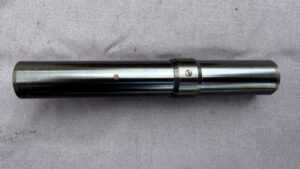
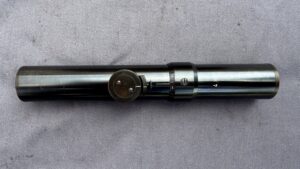
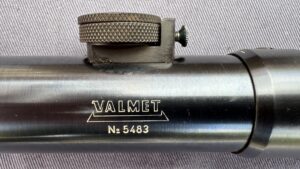
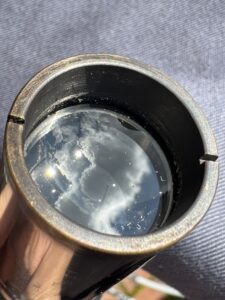
• Manufacturer: Valmet (Finland)
  • Era: 1950-1951
  • Origin of parts: Reworked Zeiss components (yes, that Zeiss)
  • Production numbers: About 500 units total — which is rarer than a sober Russian conscript in 1944
  • Markings: Found with either “VMT” or “Valmet” engravings
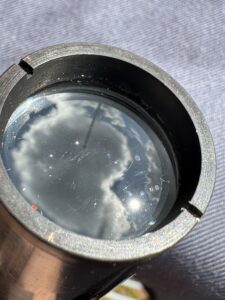
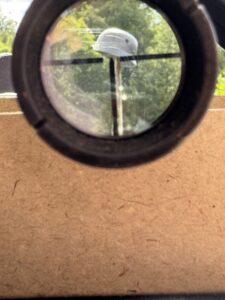
  • Optics: First-class clarity
  • Suitability for war: Absolutely none — and that’s why you can buy one today
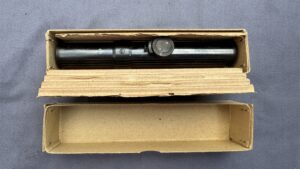
  • Condition: Like new, complete with its original cardboard box — because sometimes miracles do happen


“Perfect optics, terrible design — just like most Cold War politics.”

This particular scope is a relic of the Cold War era: simple, rugged, and about as subtle as a tank rolling through your backyard. Built in the 1950s, it embodies that charming Finnish design philosophy of “if it works, don’t overcomplicate it — and if it doesn’t, just hit it with a bigger hammer.”

And here’s the twist: these scopes were produced from unfinished Zeiss scope parts salvaged after the war. In other words, Germany started it, Finland finished it — which sounds suspiciously like the Winter War all over again.

On paper, the optics were excellent — sharp, clear, and superior to many contemporaries. Unfortunately, the construction was utterly unsuited for actual military use, making the scope about as practical for combat as a glass teacup in a trench. Because of this, the Finnish Army politely declined to adopt it, and production was shut down in less than a year after it began.

The One-Day War of the Valmet Scope

Legend has it that sometime in the mid-1950s, the Finnish Army decided to test the brand-new Valmet rifle scope. A dozen officers gathered on a frosty morning, armed with rifles, coffee, and the usual skepticism.

At first glance, the scope impressed everyone: crystal-clear optics, sharp reticle, and the kind of German-Finnish craftsmanship that made you think “this might actually work.” Then came the shooting trials.

The first soldier shouldered his rifle, aimed carefully, and fired. The recoil politely reminded the scope that it wasn’t built for war. It slipped half an inch backwards, leaving a circular bruise on the poor conscript’s eyebrow — thus inventing the term “Valmet tattoo.”

The second soldier tried tightening the mounts with the traditional Finnish solution: a bigger wrench. The scope still wobbled like a drunk elk on ice. By the third shot, the officers agreed that while the optics were flawless, the construction was better suited for birdwatching than battlefield conditions.

The official test report, allegedly, read:

  • “Optical performance: Excellent.”
  • “Combat suitability: Equivalent to binoculars glued on with hope.”

Production ended in less than a year, and the Finnish Army never adopted the scope. The few hundred that survived went straight to collectors — because nothing says “Cold War relic” quite like a scope too good for hunting squirrels but too fragile for shooting enemies.