

- Finland
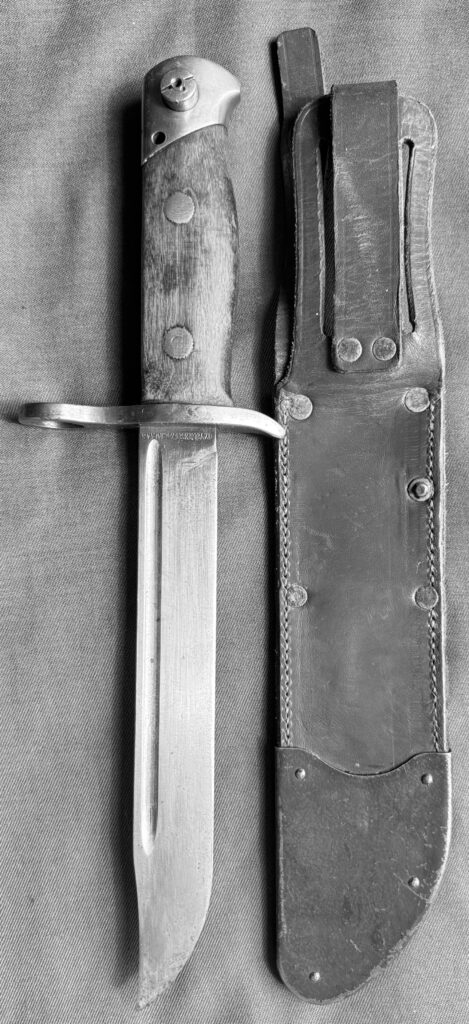
- M/39 Bayonet
- Veljekset Kulmala Oy Ab
The Finnish M/39 bayonet was not so much invented as it was begrudgingly accepted. After all, the Finnish soldier preferred to solve problems from 400 meters away with a well-zeroed rifle, not by poking someone in the spleen. But eventually, even Finland had to admit: sometimes things get uncomfortably close in the woods.
So, in the late 1930s, after years of politely ignoring the bayonet question (and quietly using reworked Mosin spike types or captured Russian blades), the Finnish Army decided it was time to design a proper bayonet for their new powerhouse, the M/39 rifle.
True to Finnish standards, the result was a no-nonsense, all-business blade: sturdy, practical, and just long enough to convince Soviet conscripts to keep their distance. Unlike the flamboyant parade daggers of the time, the M/39 bayonet wasn’t built to impress—it was built to function, fit properly, and survive both battle and winter stew duty.
Manufactured in relatively small numbers (because let’s face it, the rifle usually handled things on its own), the M/39 bayonet today is a collector’s gem — not because it’s flashy, but because nothing says “Finnish efficiency” like a knife designed purely because high command finally ran out of reasons not to.


Corporal Väinö didn’t ask for a bayonet. He already had a perfectly good rifle, steady hands, and a deep mistrust of anything that involved getting closer than 100 meters to the problem.
When the M/39 bayonet was issued, he stared at it like it had personally insulted his marksmanship. “What do I need this for? Whittling?” he muttered — and that’s exactly what he used it for.
Over the weeks, it proved excellent at opening ration tins, poking frozen firewood, and occasionally roasting a sausage if you balanced it just right. It was never fixed to the rifle — not out of protest, just out of pure Finnish practicality.
One day, during a particularly foggy patrol, Väinö thought about mounting it… but decided the real danger was stepping on a mine, not fencing with a Red Army ski patrol.
The bayonet returned to his pack, slightly greasy from bacon, and remained there — sharp, unused, and quietly appreciated for doing what all great Finnish tools do: everything except what they were originally designed for.